French label releasing records of sound-art, electroacoustic, experimental, no matter the name music.
Sign in
Login
Register

Out of Print
POIRE_Z – “Presque_chic”
5,00 €
Poire Z is almost like a super group, as it's collaborative work between drummer Gunter Muller, electronics by Erik M and the cracked everyday electronics of Moslang and Guhl - the latter two known as Voice Crack. Presented here are two lengthy and heavy weighted pieces recorded at two different festivals. Overall the music is densely layered (although I can't say if this is a straight recording or a mixed multi-track version; I assume the first) which moves into various places and spaces. Small events happen all over the place, get their shape and move to the next small event. You can detect sine waves, radio signals, static drones. Poire Z moves cleverly from subdued areas into more noisy ones, in order to slide back into softer passages. They even hit upon a strong rhythmic section in their recording at the "Taktlos festival", that is almost Pan Sonic like. Great stuff. (FdW / Vital weekly)
Read more
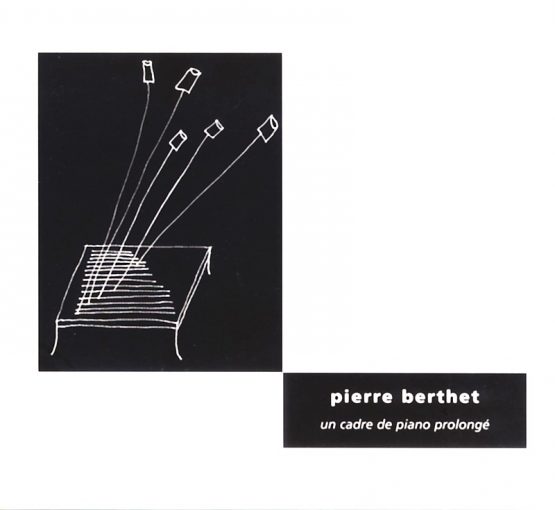
Pierre BERTHET – “Un cadre de piano prolongé”
5,00 €
"Hanging above the audience, metal cans are linked to some strings of a piano frame by long steel wires (3 to 5 m.). Strings are excited by percussion, friction, magnetic fields and electric motors." (extract from inner notes) First solo record, before the CD released by Sub Rosa, from this musician/instrument builder from Liege, Belgium (after a collaboration CD of strange songs with Frederic le Junter and one long track on a Sub Rosa compilation), also collaborator of Arnold Dreyblatt for performances. A first part in a Dreyblatt style, a center part of layered and droning sounds (but without any effects) and a more strong finale.
Add to cart
Laurent GRAPPE – “Le luxe de la réflexion !”
5,00 €
For his first CD, Laurent Grappe has created a fascinating electro-acoustic tale. Le Luxe de la Réflexion! (The Luxury of Reflection!) blurs distinctions between field recording and acousmatics, urban and rural, French and Arab. At the center of the work is Isabelle Bassil, a Lebanese woman splitting her time between France and Lebanon. Her life experience, bridging two cultures, provides the main thread. Her interventions are spoken in Arab and other protagonists speak French, but comprehension of any or both languages is not a requisite to appreciate the listening experience - the same way understanding Spanish did not constitute an obstacle in Kristoff K. Roll's South American sonic travel diary, Corazon Road. Grappe plays with the sound of speech, the emotions it conveys on a musical level transcending linguistic signification. His sound constructions at times evoke Fred Frith's soundtrack to the film Middle of the Moment: atmospheric nomadic journeys into another culture. In other places, the music is resolutely musique concrete. The three "Interludes" feature vocal performances similar to Shelley Hirsch or Joane Hetu. Although a reduction of "life," Le Luxe de la Réflexion! feels surprisingly non-abstract. Of course, the unsuspecting listener will be destabilized, but most sound elements are traceable to their sources and many bits of music are left untouched. It makes a rewarding listening experience, even for seasoned sound art fans - a very impressive debut. (François Couture - All Music Guide)
Add to cart
SENSORBAND – “Area/Puls”
5,00 €
Sensorband is a trio of musicians using interactive technology. Gestural interfaces -- ultrasound, infrared, and bioelectric sensors -- become musical instruments. The group, Edwin van der Heide, Zbigniew Karkowski, Atau Tanaka, each soloists on their instruments for over six years, formed Sensorband to create a performance ensemble. Edwin plays the MIDIconductor, machines worn on his hands that send and receive ultrasound signals, measuring the hands’ rotational positions of and relative distance. Zbigniew activates his instrument by the movement of his arms in the space around him. This cuts through invisible infrared beams mounted on a scaffolding structure. Atau plays the BioMuse, a system that tracks neural signals (EMG), translating electrical signals from the body into digital data. Together, Sensorband creates a live group dynamic, bringing a visceral physical element to interactive technologies. The basic materials are pure oscillator waves. The result can be considered as the missing point between Hafler trio (Z. Karkowski used to be a regular member), Ryoji Ikeda and no-rhythmical Panasonic.
-
"Shame of course upon myself: I have never seen the Sensorband live, and that is a pity. Three guys with a bunch of ropes, connected with sensors. By moving around, climbing in the ropes, the sound is changed by the sensors. These three guys are Edwin van der Heide, Atau Tanaka and Zbigniew Karkowski - three guys with a wide experience in sound, electronic music and performances. The question of course is: will their sound last on CD? Since they use pure tones and oscillations which change because of bodily movements, nothing might happen if you play this at home. It's unclear wether these four tracks, one analogue and three digital, are recorded live, or used in live performances. The CD opens with 'digtal.1', a slowly moving static line with small pulses, gradually increasing tension. The 'analogue' track is much a like, but much slower. The built-up takes more time (no surprise in a track that lasts 28 minutes) and is very austere in setting. The two shorter 'digital.2' and 'digital.3' are like the opening track. More pulsating, without getting anywhere near a beat. Number is almost like a sentimental song, with a tone of sadness in there. The presstext talks about the missing link between Hafler Trio and Pan Sonic, I'd like to add a link to Alvin Lucier's Music On A Long Thin Wire: pure tones changed by the environment. A very minimal, but very nice work..." (FdW / Vital Weekly)
Add to cart
Out of Print
David MARANHA – “Piano Suspenso”
5,00 €
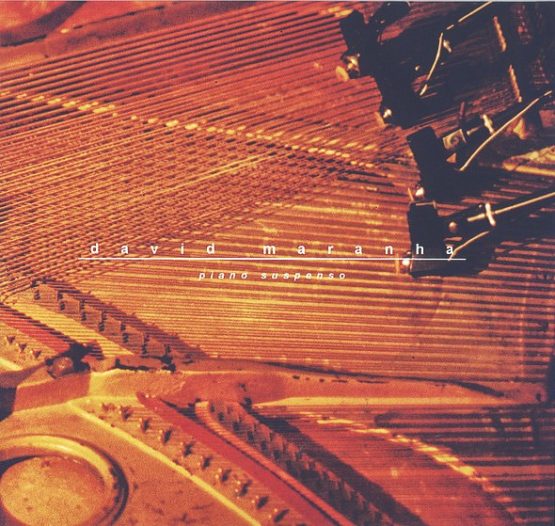
« After a tentative opening consisting of damp harmonic scrapes, the piece takes off like a single-engined light aircraft when Maranha kickstarts his four-motored piano effect and then starts to tease single notes from the bubbling background with his bow. This is a great and physically affecting slab of sound, where the slightest minimal shift causes tectonic plates to groan. It’s gravy train stuff for fans of Maryanne Amacher, Arnold Dreyblatt and – perhaps Maranha’s major influence – Phill Niblock. » David Keenan - The wire (aug. 99)
« David Maranha, one third of Osso Exotico, recorded a hauntingely beautiful piece in New York, using four motors and a violin bow to play the grandpiano. The motors create rich textures of overtones that slowly go in and out of phase and make unknown harmonies audible. The bow plays something like the melody off and on. There is a very special thanks to Phill Niblock and if you know his music, then you know what to expect as it fits his tradition of minimal music very well. » Frans de Waard - Vital weekly
Add to cart
Christian ALATI / Giuseppe IELASI / Ruggero RADAELE
5,00 €
Sonoris isn't exactely known as an improv label, but they make an exception here with the work of three Italian improvisers, which are closely linked to the super improv label Fringes. I didn't glance very much at the cover very much while playing this CD, so the notion that these are two guitarists and a percussionist struck me. Whatever they produce, its hard to pin down as guitar and percussion. They go by a slow curve from almost silence to almost noisy, with crackles (what sort of guitar produces crackles like a lap-top, me wonder in mild curiosity). There those recognizable AMM influenced bits (although their curve is usually even longer) and even a link to industrial music (the motor like buzz in 'Text Piece'). This makes this into a somewhat more varied CD, and you could even wonder if the variations aren't too much. Myself, I thought it was ok and thought it was a well-entertaining CD. (Frans de Waard / Vital weekly)
Add to cart
Out of Print

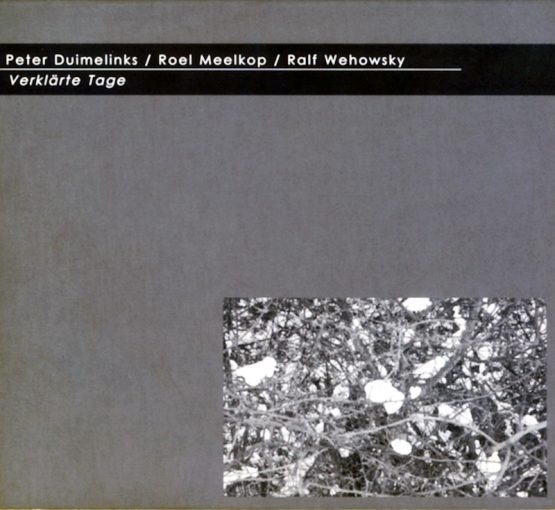
Peter DUIMELINKS / Roel MEELKOP / Ralf WEHOWSKY – “Verklärte Tage”
5,00 €
Ralf Wehowsky (RLW) was founding member, and most important conspirator in P16D4. Peter Duimelinks and Roel Meelkop were members of THU20. Profitable postal collaboration (or each one composes from another one's material) and between three current figures of electroacoustic musics. Stratified resonances, shocks of sounds like tectonic plates, brutal ruptures opening on different spaces. A formal and structural work of the most interestings. (Jerome Noetinger / Metamkine)
Needles to say that at least I think this is a well made CD, that is witty and serious, and should be part of your record collection if you care about this sort of music. (FdW / Vital Weekly)
Add to cart
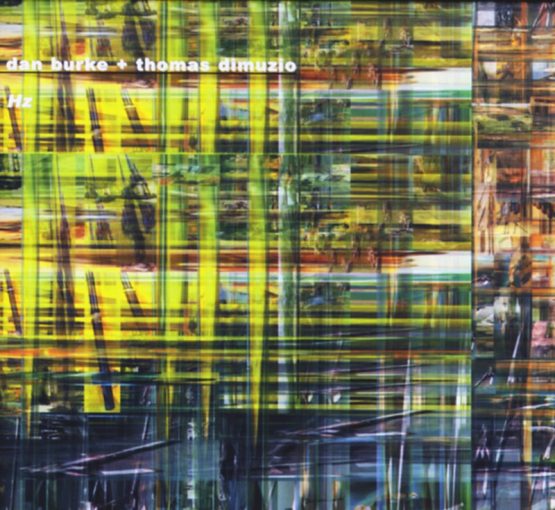
Thomas DIMUZIO – Dan BURKE – “Hz”
5,00 €
The truth is, you found something incomprehensibly comforting in these sounds, this noise, this audible darkness. It occupies the space and fills your lungs, so in such a short time you grew accustomed to this nightmare, probably just in time for Burke and Dimuzio to sever the umbilical cord so suddenly, leaving you helpless and in silence. (Richard di Santo / Incursion)
-
Dan Burke has called this one of his favorite works he's put out. Dimuzio is the guy behind Gench Studios, the place where so many experimental labels get their stuff mastered. HZ is a refined, driving, eclectic nightmare of beats, darkhop and odd sound tones and soundscapes. The listen deepens as it progresses, with varied layers of styles developing and fading. Very nice little digipack item. (Manifold web site)
-
Illusion of Safety mainstay Burke and sonicist errant Dimuzio are a perfect pair. Their common chosen path is one of electroacoustic exploration, combining sampling, processing, tapes, and live noise-making (calling their enthusiastic instrumental and radio-knob manhandling "musicianship" would be overly generous) in live and studio settings. Each artist brings to the workbench an affinity for the nature of sound.
HZ documents a series of California performances presented by Burke and Dimuzio in October of 1997. The improvised tracks operate in the desolate arena of post-industrial sound, but the perpetrators take a page from the example of AMM's jazz-like metamusical interplay to imply a certain, if covert, human presence. Motors purr, hiss, scrape, and groan, setting up a foundation of sonorous drones for Burke and Dimuzio's sonic manipulations and electronic outbursts. The duo's efforts range from freakish alien-zoo atmospheres ("Aware," "Dross," "Outflow") to the labored workings of arcane machinery ("Dropforge," "Rota"). HZ strikes an especially poignant note on "Charastrigor," as radio strains drift sadly across the rubble of a bomb-scarred city square.
(Allmusic)
Add to cart
Out of Print
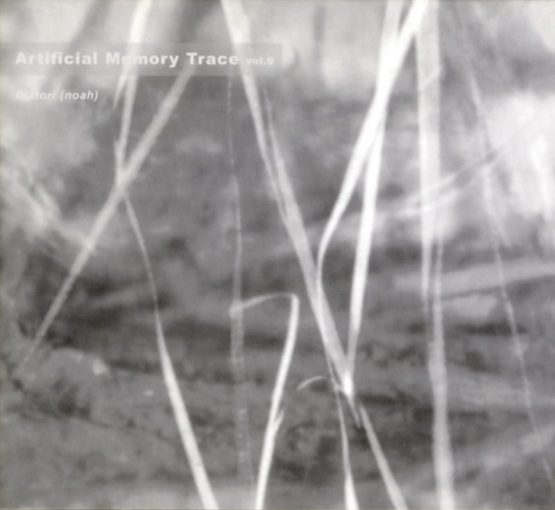
ARTIFICIAL MEMORY TRACE – “Distori (Noah)”
5,00 €
Artifical Memory Trace sort of is the right person to fit these traditions of electro-acoustic music: intelligentely composed with modern means (read: sampling), into relatively short pieces that hold the attention. Without any limitation he jumps back and forth in his sound material. Sometimes all the events seem to be apparent at the same time, but at other times one long curve is drawn, such as in the beautiful opening piece 'Skeletune(s)'. AMT can be placed among the likes of Illusion Of Safety and Brume. With the latter AMT shares something odd: presenting a large body of work, which ranges from good to excellent, it is hard to see the difference between each work. (FdW / Vital Weekly)
Slavek Kwi continues its excellent work of organization of sounds in time and spaces exploiting great dynamic scales, unexpected ruptures, complex morphologies and astonishing changes. He pays much importance to the environmental sounds. (Jerome Noetinger / Metamkine)
Add to cart
Out of Print
Out of Print
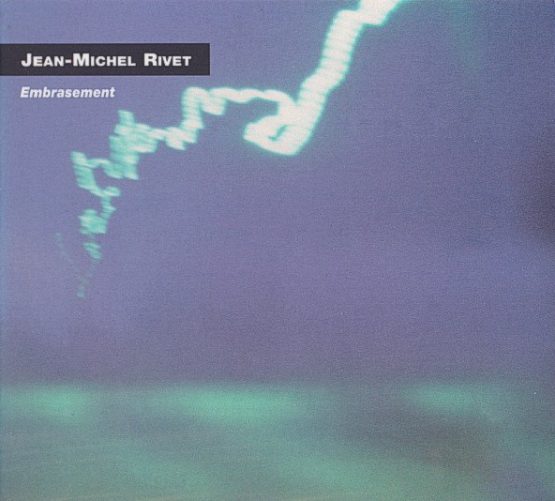
Jean-Michel RIVET – “Embrasement”
5,00 €
French composer from Bordeaux influenced by Pierre Henry and Luc Ferrari.
1. Embrasement (February 95)
2. Mains brisées = Broken hands (June 97)
3. Elle somnole jolie (June 95)
4. Etude aux sons canelés = Study for bells and other ringing sounds (December 95)
5. La chute d'Icare = The fall of Icarus (February 97)
Track 6 is not mentioned on the release (this is just water sounds).
6-panel digipak cover. Contains 12-page booklet with lyrics in French and English.
Add to cart
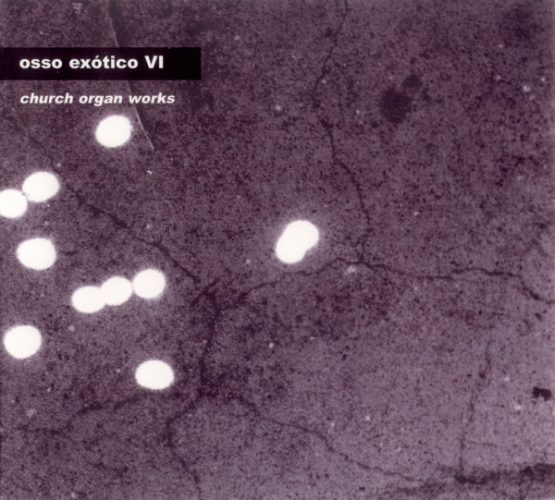
OSSO EXOTICO – “Church organ works”
5,00 €
The three piece group from Portugal explore in ten tracks the possibilities of the church organ. The members play in various combinations on different organs. The outcome is very varied. The opening piece is barely audible, but the second piece is a loud, repitive, all register open one. Of course it's hard to see this music without any religious overtones, but Osso Exotico don't give a clue in that direction: all their pieces are untitled. Meditative pieces in most cases, but less minimal then the known minimalist who grew up with playing organ. This is a different approach then Charlemagne Palestine would do, but none the less this is quite interesting. (Frans de Waard - Vital weekly)
Add to cart
Out of Print
Out of Print